Article
There is a kind of founder that every operator has worked with at least once.
Responsive. Decisive. Always available. The kind of leader who answers Slack messages at 11pm, who jumps into decisions the moment they stall, who takes pride in never being the bottleneck.
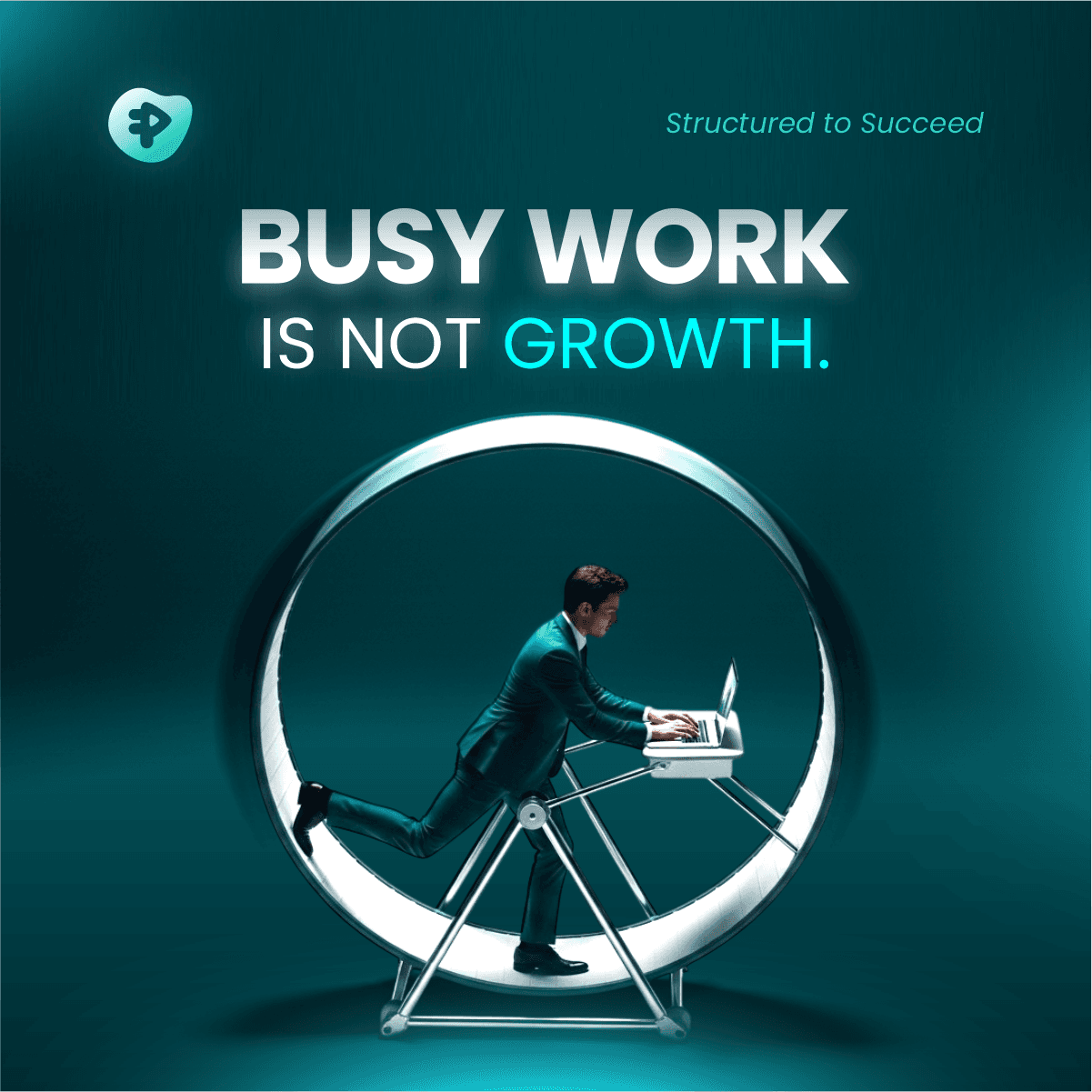
And they are right that they are not the bottleneck.
They are something more expensive than a bottleneck. They are the infrastructure.
How Availability Becomes Dependency
Every time a decision routes back to them, the system learns that decisions route back to them. Every time they jump in to close a loop, the team learns that loops get closed that way. Every override, every clarification, every "let me just handle this" is a quiet lesson to the organization about how work actually moves, and the lesson is always the same. Through you.
This is not a design decision anyone made. Nobody sat down and decided the founder should be the load-bearing wall of the organization. It happened the way most structural problems happen inside growing companies, gradually, invisibly, through thousands of small moments that each felt like the right call at the time.
The team is not dependent because they are weak. They are dependent because the system was never given another path forward. And the founder, to their credit, kept showing up. The problem is that showing up and building infrastructure are two very different things, and at a certain stage of growth, one actively prevents the other.
Showing Up Built the Company. It May Also Be the Ceiling.
This is not a criticism of founders who show up. Showing up built the company. The question is whether showing up is still building it, or whether it has quietly become the ceiling.
The ceiling reveals itself in specific ways. Growth starts to feel heavier than the numbers justify. The team expands but leadership load does not decrease — it increases. Every quarter brings new revenue and new complexity, but the founder's calendar somehow never gets lighter. Decisions that should be moving without them keep finding their way back.
What is happening in those moments is not a people problem. The team is capable. The intentions are right. What is missing is
the structural layer that would allow the organization to carry decisions forward on its own, without routing them back through the one person whose involvement the system has been trained to require.
What Leadership Load Actually Measures
Leadership load is not a feeling. It is a structural signal.
How often does the founder intervene in decisions that should have already been settled? How frequently do escalations arrive that had no business escalating? How much of any given week is spent clarifying, overriding, or re-entering work that should have closed without them?
These are measurable things. And what they measure is not the quality of the team, it is the maturity of the infrastructure beneath them. A high intervention rate is the organization telling you, in the clearest language it has, that the decision layer was never formally installed.
Most founders interpret high intervention as evidence that they are needed. What it actually measures is how much structural work remains to be done.
Capacity Is Not Headcount
The default response to leadership load is to hire. More people, more capacity or so the logic goes. And hiring can help. But hiring into an informal decision layer does not reduce leadership load. It distributes it differently while increasing the overall complexity of the system.
Real capacity is structural. It is the ability of the organization to carry its own decisions forward, cleanly, predictably, and without requiring the founder to be the final word on work that should have been settled three levels below them.
Growth compounds when structure carries what the founder used to carry. Capacity increases not when leaders work harder but when the system learns to move without them on the decisions that do not require them.
What the ERA Looks For
The Execution Readiness Assessment examines the intervention layer directly.
We look at how decisions move, where they stall, how frequently they travel upward when they should not, and what the organization has quietly learned about who carries the work forward. We examine ownership patterns, escalation behavior, and the structural gaps that are generating leadership load, not to assign blame but to locate exactly where the infrastructure needs to be built.
What we find consistently is that the founders carrying the most load are also the ones who built the strongest companies. The load is not evidence of weak leadership. It is evidence of strong leadership operating inside infrastructure that has not kept pace with the growth around it.
That gap is closeable. But it has to be examined before it can be corrected.
The Ceiling Most Founders Never Name
If stepping back ever feels irresponsible, that feeling is worth examining. In most cases it is not a signal that the team needs more of you. It is a signal that the infrastructure needs to be built.
If any part of this landed, it usually means the conversation is overdue.
The ceiling in most growing companies is not talent. It is the founder's calendar.
Structure is not glamorous work. But it is the only work that compounds.
We operate at that layer.
— Chris Mikaya, CEO, The Plugs